
Searching the Omaha Court Docket
Don't look for a city-branded Omaha court search. The official state directory lists no separate municipal-court docket portal for Omaha. State-court cases here run through the statewide JUSTICE system instead. JUSTICE opens a lot of doors at once. You get Case Detail, party names, offense and financial information, a Register of Actions, judge notes where available, and public document images. Treat a name match as tentative. Before trusting it, check the court, case type, year, caption, and filing date against what you know. Verify those details first.
The Nebraska Judicial Branch's case-information service lays out the statewide search routes. A one-time party-name search costs $17. It returns up to 30 records and stays active for three calendar days. Fresh Omaha filings can lag behind by up to 24 hours. A subscription account digs deeper. It filters by party, court type, case type, county, year, judge, attorney, judgment date, or case number.
- Classify the Omaha matter from the citation, caption, or case number: traffic or ordinance, County Court, District Court, Separate Juvenile Court, or federal court.
- Use JUSTICE with the Omaha party name or case number, then narrow the Omaha result by Douglas County and court information where necessary.
- Open the Omaha Case Detail and compare the court, type, caption, filing date, and party roles before reading the Register of Actions.
- Read the newest Omaha docket events, review any public images, and note the next setting or the latest disposition entry.
- Use the Omaha court clerk for record confirmation or a certified copy, especially when the Omaha entry is recent, restricted, or incomplete.
Why Omaha Has No Court Portal
Here's the routing reality for Omaha. The official court directory names three courts. They are Douglas County District Court, Douglas County Court, and Douglas County Separate Juvenile Court. It lists no separate Omaha municipal-court clerk, calendar, or docket portal. That gap is not a dead end. Omaha traffic and municipal-ordinance cases travel the Douglas County Court path. Public trial-court records then open through JUSTICE as the statewide access layer.
Omaha city offices do keep records of their own. Ordinance text, council material, and city administrative files live there. None of that is a court complaint, judgment, payment entry, or Register of Actions. Seeing the city name on a citation or ordinance should not tempt anyone to invent an Omaha court website. The directory simply does not show one.
Omaha routing point: an Omaha ordinance tells what the city adopted; a Douglas County Court record shows whether an Omaha case was filed and what happened in court.
Omaha Municipal Court Basics
No separate Omaha municipal-court docket appears in the current official court directory. The working lower-court route is Douglas County Court. It handles a wide mix of matters. That mix covers municipal ordinance violations, traffic, misdemeanors, probate, small claims, civil matters within its limit, and felony preliminary hearings. So Omaha is served by a state County Court system. It has no municipal docket of its own.
An Omaha felony can leave two records behind. The preliminary hearing happens in County Court. After bind-over, the trial and later events move to Douglas County District Court. Omaha juvenile cases go through the Separate Juvenile Court, where confidentiality rules apply. When deciding where a record lives, court type beats an Omaha street address every time.
Omaha counted 486,051 residents in the 2020 Census. That is the largest incorporated-place population in Douglas County. The Census incorporated-place table supplies the consistent population vintage behind that local ranking.
Omaha State-Court Ticket Path
Start with the citation itself for an Omaha traffic or ordinance case. The statewide Nebraska citation service is the other place to begin. Pick Douglas County. Enter the Omaha citation details, and read the appearance or waiver instruction closely. The form distinguishes standard citations from electronic ones. It asks for the citation number, citation date, person information, address, and amount. Hang onto the printed citation date even when an online record exists.
The Nebraska citation information page explains the fork in the road. A waiver may let you plead and pay without appearing. Another offense, or a nonwaivable citation, can require a court appearance instead. Read any Omaha ePayment information alongside the citation and court notice. Paying online is not a court disposition, and it will not recall a warrant.
Traffic, payment, appearance, plea, and judgment entries all remain court-record matters in Omaha. The licensing agency keeps driving history separately. A court file and a driving record are not interchangeable.
Court Dates and Settings in Omaha
An Omaha setting can surface in several places. Check the Register of Actions. Check a judge's schedule, the statewide Multi-Court Case Calendar, or the citation itself. The newest event plus confirmation from the responsible court is the safer basis for showing up. Confirm before you go. That calendar covers Douglas County Court and eligible juvenile settings by date or surname. Its District Court coverage expressly excludes Douglas.
| Date | The Omaha hearing or docket date; the public calendar's date search is for current or future dates. |
|---|---|
| Time | The Omaha time shown for the setting, which can differ from a general docket-call time. |
| Location | The Omaha court location or courtroom listed in the case record, calendar, citation, or court notice. |
| Judge | The presiding Omaha judge where the record or schedule identifies one. |
| Setting type | An Omaha arraignment, preliminary hearing, motion hearing, plea, trial, sentencing, review, continuance, or reset. |
A blank result on the Omaha calendar does not prove the court date is gone. It may just mean the search came up short. Treat the calendar as one clue among several. Before relying on it, check the case record itself. Then ask the Omaha clerk or the judge's office to settle any discrepancy.
The Omaha calendar lets you search by date or by last name. A surname needs at least two characters. It carries its own warning: entries can be incomplete, inaccurate, or untimely. A continuance or reset can move a hearing after the calendar was posted. So when a displayed date clashes with a notice, a citation, or a later docket entry, trust the most recent Register of Actions entry. Trust the assigned judge's schedule where one exists, and confirmation straight from the court.
When you call for confirmation, keep the citation, the notice, and the case number in hand. A court employee can point you to the right division. Still, the case record stays the true source. It holds the full event history on any Omaha docket.
Omaha Hall of Justice and Civic Center
Omaha court business happens at two downtown buildings. The Hall of Justice at 1701 Farnam handles District Court, County Court Criminal/Traffic, and County Court Probate for Omaha. Douglas County Civic Center, at 1819 Farnam, is where Omaha Civil and Small Claims live. Know which division holds your record first. Then travel or call the clerk, and you will land in the right spot.
Douglas County Law Library
Hall of Justice, 1701 Farnam Street, Omaha, NE 68183
Public research computers are listed Monday through Friday, 8:30 a.m. to 5:00 p.m. when the courthouse is open.
402-444-7174
Omaha's Self-Help Center sits near the Law Library on the Harney Street level, with walk-in hours listed for Monday and Wednesday. It offers information, not legal advice. If a JUSTICE subscription is out of reach, the Law Library terminal is a practical path into the court docket.
Traffic Tickets in Omaha
A traffic ticket written in Omaha does not go through some separate Omaha city court. It runs through Douglas County Court as a county record. Pull up the citation with the number and the date it was issued. Pick Douglas County in the state citation service, and check whether the ticket lets you waive it or makes you show up. Lost the citation? Call the County Court for help, or use the official waiver and plea route. Guessing from a payment page is a bad idea.
Paying online in Omaha takes some care. The statewide ePayments service takes cards and eCheck and tacks on a service fee. Bond is not accepted online. A payment applies right away, but the money is not disbursed for seven days. Your online confirmation proves a transaction happened. It does not replace the Omaha case record or an updated Register of Actions. The Traffic Tickets page walks through the countywide citation process.
Omaha Citation Details and Disposition
An Omaha citation states an allegation and tells you when to appear. It is not the final word on outcome. The court record may later show a plea, hearing, continuance, judgment, payment, or dismissal. Before treating citation details as final, check the court, case number, caption, and the latest Register of Actions entry. Verify each piece before you rely on the page.
Citations come standard or electronic. A number, date, and county beat a common Omaha surname as search keys. Is a fresh citation missing from the docket? Recheck the number. Allow for the known entry delay, and ask County Court to confirm. They can check the filing for you.
Where Omaha Cases Go
Every Omaha case belongs to the court with subject-matter jurisdiction. Traffic, municipal-ordinance, misdemeanor, probate, small-claims, and qualifying civil cases go to Douglas County Court. A felony starts with a County Court preliminary hearing. After bind-over, it moves to District Court. Major civil, domestic, protection-order, and administrative-appeal matters sit in District Court. Juvenile cases head to Separate Juvenile Court. Each split matters for a docket search.
Docket flow: Omaha citation or city allegation › Douglas County Court › Douglas County District Court when the case is bound over or otherwise falls within District Court jurisdiction.
One Omaha event can spawn several records. A city ordinance case, a County Court file, and, for a felony, a later District Court docket may all trace back to the same facts. The Douglas County Court Docket lays out the court hierarchy and clerk paths.
Omaha Court Documents and Images
An Omaha Register of Actions is only the event index, not the full case file. JUSTICE can supply public document images. Yet an image may be missing for several reasons: sealed or protected material, archived paper, documents not yet imaged, or files kept from public view. Anything you copy off a screen is not a certified Omaha record either. Ask the court clerk holding the Omaha case for a certified or mailed copy. Submit a CC 3:29 request to get it.
Nonconfidential images of documents filed or uploaded after April 16, 2008 became available through one-time JUSTICE searches in January 2024. Omaha also hosted the first Judicial Electronic Exhibit System pilot in 2024. The official Omaha electronic-exhibit pilot announcement records that local milestone.
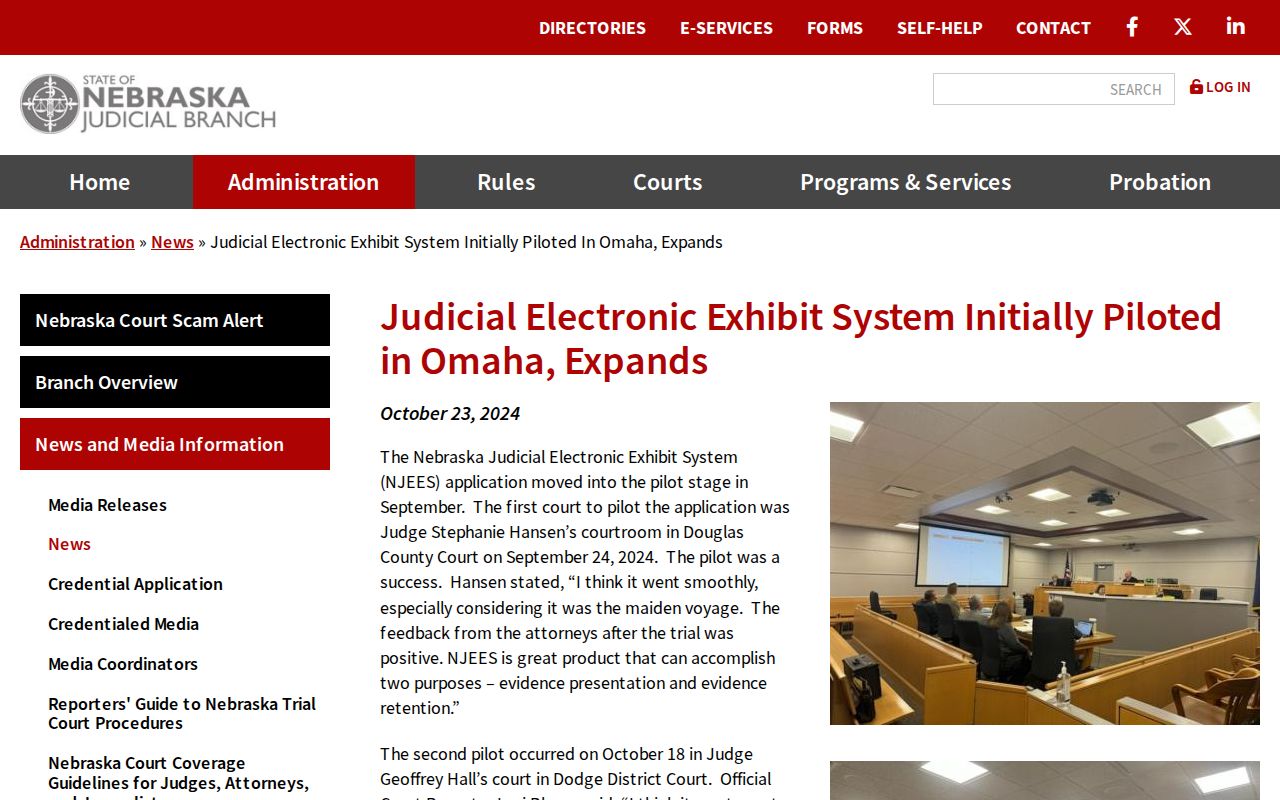
The Omaha pilot does not make every exhibit or case document public, searchable, or imaged. Limits still apply.
A copy request works best when it names the county, case number, case name, document name or date, delivery preference, certification choice, and your contact information. Give the clerk every detail. Non-certified electronic copies carry no charge; mailed non-certified copies run $0.25 per page. Certified electronic copies cost $1 per request. Mailed certified copies add $1 per seal plus $0.25 per page. Prepay the costs. The form promises no turnaround time.
Omaha Court Record Access Rules
Omaha court records answer to Nebraska court-access rules, not a local municipal-record rule. Public electronic access can include case indexes, summaries, party information, Registers of Actions, calendars, and document images where they exist. Limits still bind. Juvenile records, sealed filings, protected addresses, Social Security numbers, and financial account data stay restricted, even when the case caption shows up in a docket search.
Key Rules:
Nebraska Supreme Court Rule § 1-805 describes electronic access to public court indexes, summaries, Registers of Actions, images when available, and calendars unless restricted.
Neb. Rev. Stat. § 84-712 provides a public inspection and copying right subject to exceptions and generally calls for a four-business-day response choice on a written request.
Neb. Rev. Stat. § 43-2,108 limits access to Omaha juvenile case files and identifying information as the statute allows.
Before contacting the clerk for a copy, pin down the Omaha court, case number, case name, document, and whether you want mail or certification. City-record requests for Omaha are a separate track from court-record requests.
Omaha Federal Dockets Are Separate
Omaha also hosts the federal District of Nebraska's Omaha Division. A federal case there is not a JUSTICE case, though. Public research runs through PACER. CM/ECF serves authorized filers as the federal filing and case-management system. The federal courthouse and the Omaha state-court complex are separate institutions. They keep separate case numbers and access systems too. For a federal Omaha case, PACER's official public-access service is the right tool. It is not a Douglas County docket search.
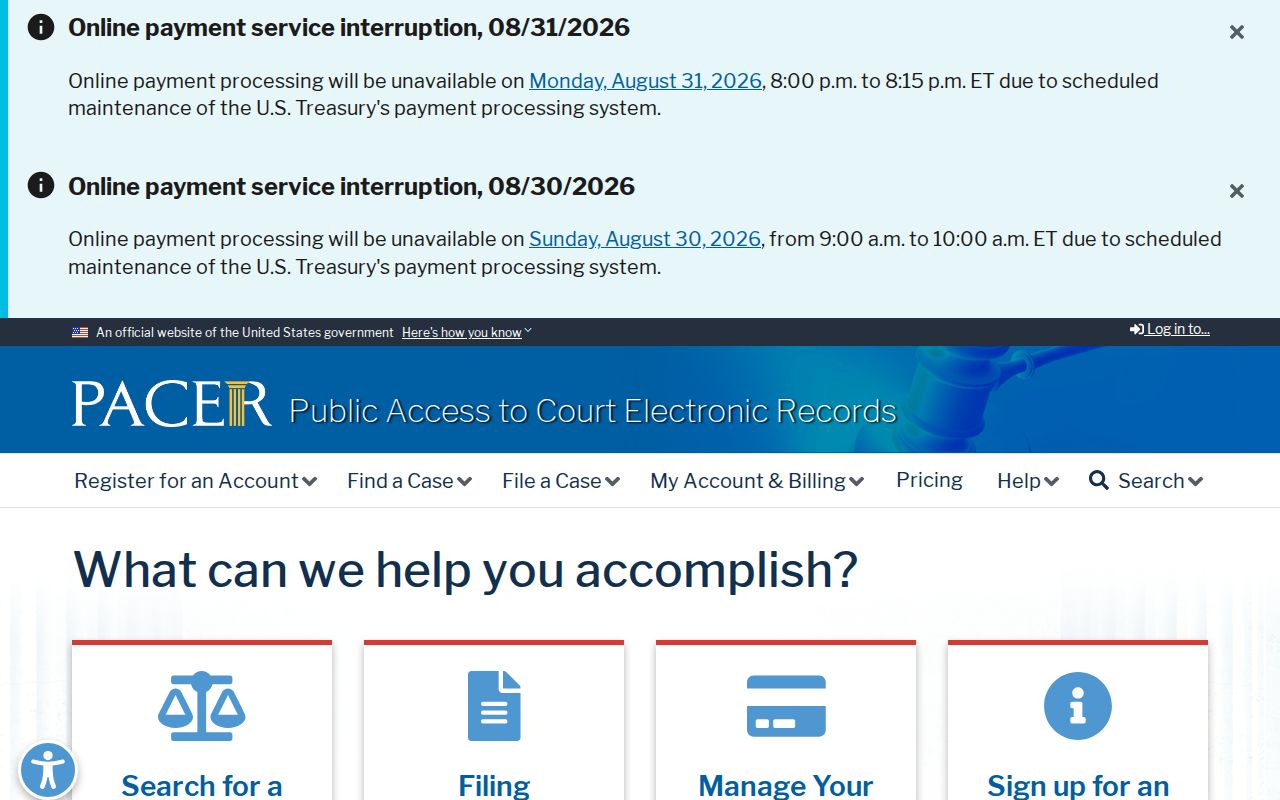
A PACER hit for Omaha comes from the federal court record, not from a Douglas County Court or District Court docket. Keep the two systems straight. The District of Nebraska CM/ECF entry point shows how federal filings run apart from the state JUSTICE records Omaha's courts use.
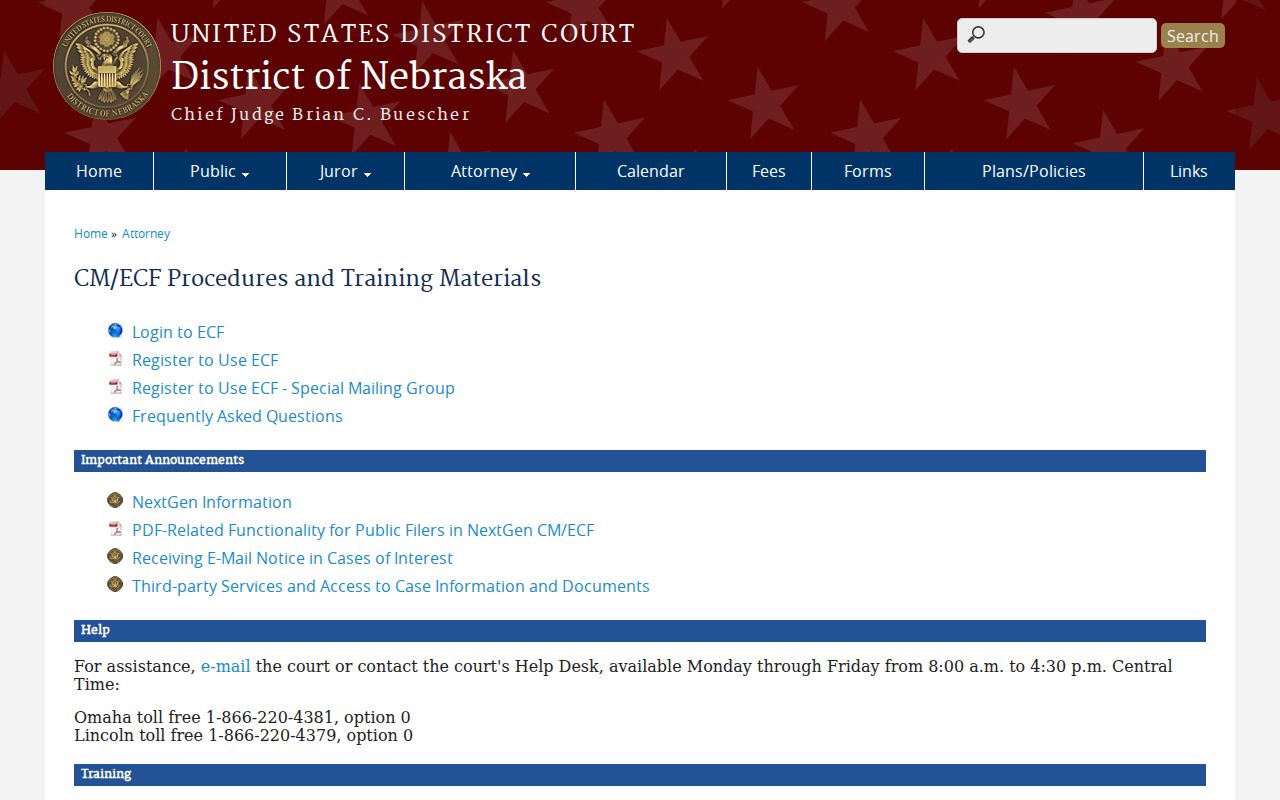
CM/ECF access cannot substitute for the Omaha state-court Register of Actions or a public copy request filed with the clerk. Federal and state dockets stay separate.