
Searching Douglas County Criminal Dockets
Nebraska runs its trial courts on JUSTICE, a statewide record system, and the Nebraska Judicial Branch case-information services page explains what it offers. Case Detail comes through it. Party Listing, Offense Information, and financial data do too. So does a Register of Actions, judge notes where released, and many public document images. The one-time name search costs $17. It stays open for three calendar days and caps results at 30 records. Subscriptions add filters and case-number searching. When an entry is new, restricted, or confusing, a clerk's answer still beats either route.
Search smart once you are in. A party-name lookup ignores witnesses, and people with the same name abound, so confirm a match through the caption, filing year, judge, and court. Fresh JUSTICE entries can take up to 24 hours to show up. Prefer free on-site access? Nebraska policy puts public JUSTICE terminals in county courthouses during business hours, and the Douglas County Law Library offers public research computers too.
- Open the statewide case-information service and choose the appropriate JUSTICE search path.
- Search the defendant or party name, adding county, court type, year, or case type only when needed.
- Open the matching result and verify the Douglas County court, caption, and case number.
- Read the Register of Actions from the filing forward, then check the newest setting.
- Ask the correct clerk for a current confirmation or a certified document when the docket alone is insufficient.
Note: A name search can charge you even when it returns nothing. If you know the case number, start there instead.
Douglas County Criminal Court Split
One county, several dockets. Douglas County splits criminal work across three courts. County Court takes adult misdemeanors, traffic matters, city-ordinance violations, and preliminary felony hearings. When a felony is bound over, Douglas County District Court takes over. It picks up the trial and sentencing record. Nebraska law assigns juvenile matters to the Separate Juvenile Court. Stop at a single venue. You may miss the preliminary stage, the later felony case, or a restricted juvenile matter. Pam Cardenas serves as County Court clerk; Crystal Rhoades holds the District and Separate Juvenile clerk functions.
| Court | Douglas County criminal docket scope | Confirmation route |
|---|---|---|
| County Court | Misdemeanors, traffic, ordinances, and felony preliminary hearings | JUSTICE or County Court clerk |
| District Court | Felony prosecution after bind-over, trial, and sentencing | JUSTICE or District Court clerk |
| Separate Juvenile Court | Juvenile delinquency and related matters | Juvenile clerk, subject to confidentiality |
The Douglas County District Court directory lists the Fourth Judicial District court and its clerk contacts.
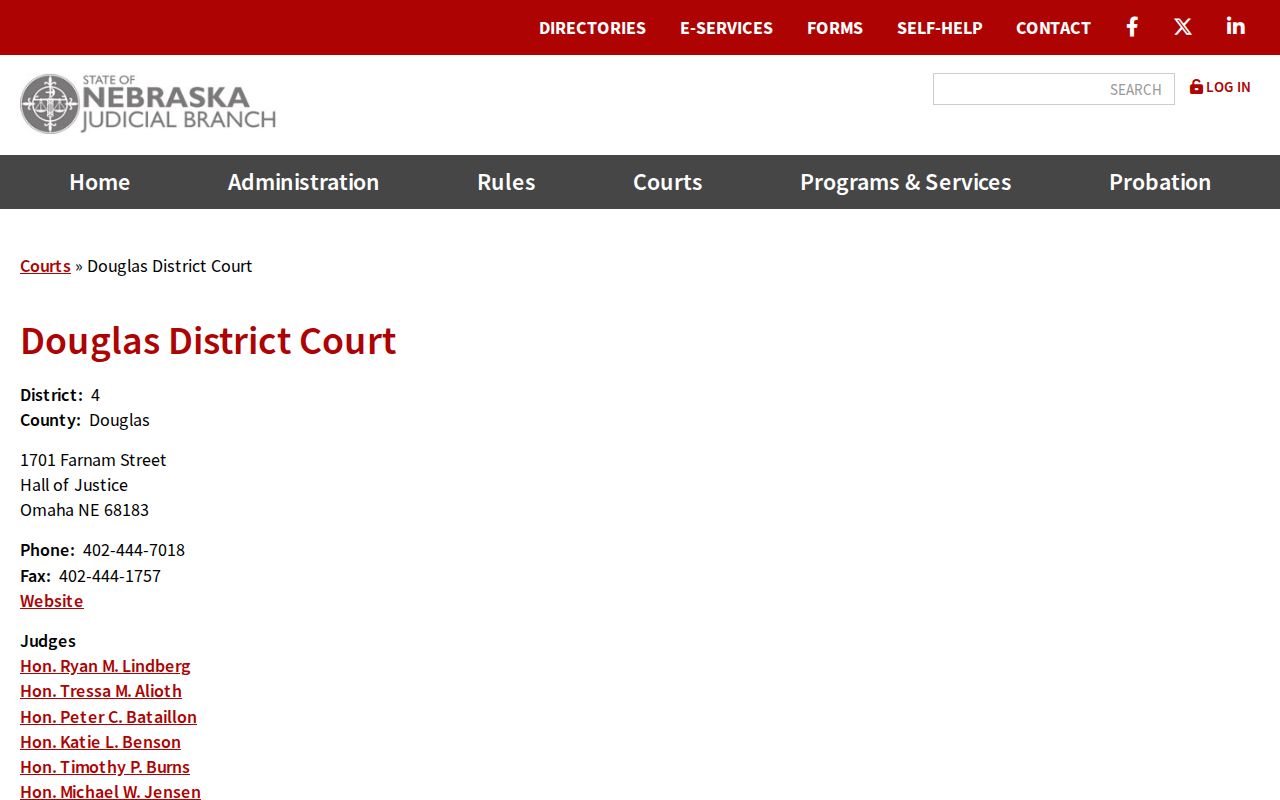
Once a felony leaves County Court, the District Court docket becomes the one to watch. The earlier preliminary-hearing entry, though, stays in the County Court record.
Inside a Douglas County Criminal Docket
Nebraska names the chronological event list a Register of Actions. Think of it as an index of filings, hearings, and orders. It does not prove every fact in a case. A criminal result may also show parties, offense information, payments, and public images. Start with the case summary. Then place each event in time using the Register. When an image exists or a clerk supplies a copy, go to the paper. The complaint, order, or judgment holds the full text.
| Case number | Identifies court, county, type, year, and sequence. A structural example is D93 CR-14-0000019, not a live Douglas case. |
|---|---|
| Offense information | Charge-related information that should be read with the court and filing date. |
| Register of Actions | Chronological filings, settings, hearings, orders, and later events. |
| Party listing | Names and roles used to confirm that a search result is the intended case. |
| Disposition | The stated outcome or current end status, not a substitute for the judgment document. |
An image may be missing because the document is restricted, redacted, not yet imaged, or kept in another medium. A missing image proves nothing about whether the filing ever happened.
Douglas County Criminal Search Limits
The $17 one-time search suits a public party-name lookup, but two limits shape what you get. It returns no more than 30 records. A new entry may also lag by 24 hours. Piling on filters too early can hide an older case or one coded differently. Run a broad search first to catch name variations. Then separate results by court, year, or case type.
The JUSTICE One-Time Court Case Search shows the agreement screen before any search begins.
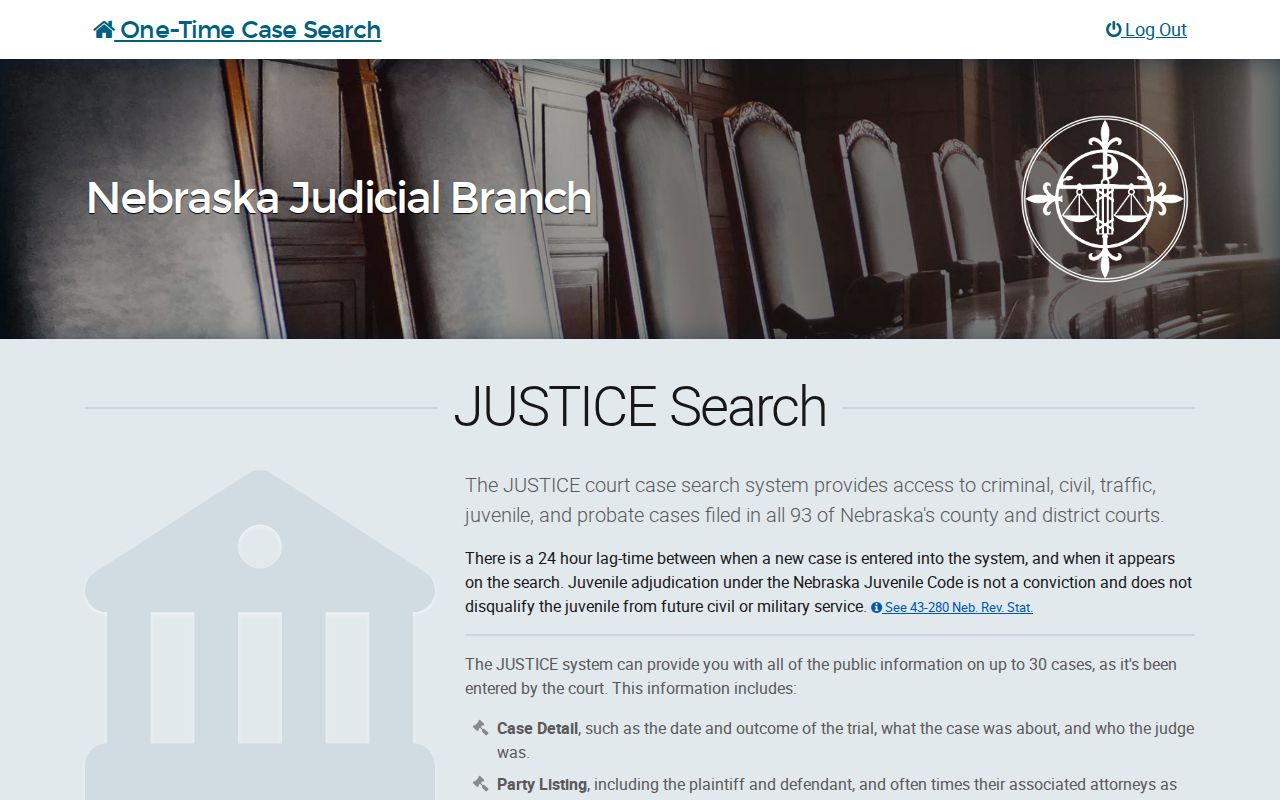
A blank date on the statewide calendar does not clear a case. The calendar only tracks dates. For the real record trail, use the Register of Actions or ask the clerk.
How a Criminal Case Moves
A docket records a criminal case as it advances. But the order of events shifts with the charge and the court. In a Douglas County felony, the County Court preliminary hearing often comes first. A bind-over then moves the case. The District Court record after that carries the trial, plea, or sentencing. A misdemeanor usually stays in County Court from filing to disposition.
Docket flow: Filing → Arraignment → Pretrial → Plea or Trial → Disposition → Sentencing
An arraignment is a court appearance on the charge. A pretrial setting handles matters before trial. A disposition states the current outcome, and sentencing records the court's sentence when a case gets that far. Each entry needs its date and order for real context.
Douglas County Criminal Docket Terms
JUSTICE labels and docket shorthand call for plain reading. No complete Douglas-wide abbreviation legend exists, so check unfamiliar shorthand against the actual order or the clerk. These common terms describe a process step. They do not predict what happens next.
- Bind over
- A preliminary-hearing result that sends a felony matter from County Court to District Court.
- Arraignment
- A hearing at which the criminal charge and response are addressed.
- Continuance or reset
- A setting that has been moved to another date.
- Nolle prosequi
- A notation that the prosecution is not proceeding in the stated posture.
- Disposition
- The stated outcome or current end status on the case record.
Do not overread words like dismissed or deferred. The controlling entry is the specific order and its record context, not a bare label in a search result.
Courts That Hold Criminal Dockets
Douglas County criminal records don't sit in one place. The Douglas County Separate Juvenile Court keeps its own clerk. It also has its own confidentiality rules. That alone breaks any promise of a single "Douglas criminal docket" list. Omaha, Ralston, Valley, Bennington, and Waterloo cases add another wrinkle. Ordinance and traffic matters from those cities do not get their own portals. They route through County Court instead.
Location matters when you chase a court date. It matters just as much for a filing. The County Court Criminal/Traffic division sits in the Hall of Justice. The District Court clerk works in the same building. Knowing which court holds the docket saves a wasted trip and a misdirected question.
The juvenile court's official page lists its separate clerk location and contacts.
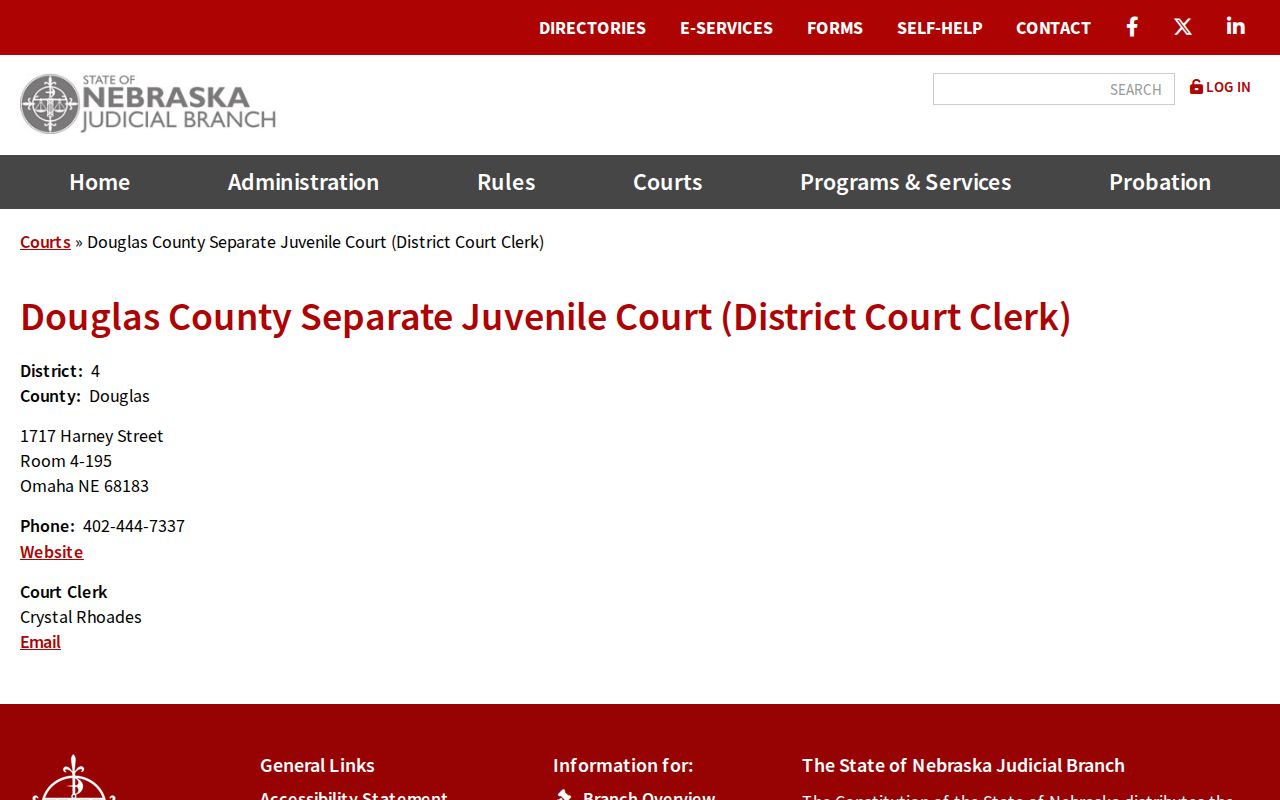
That split structure has a practical cost. A generic request sent to the wrong county office can stall the hunt for the right criminal record until it lands with the correct clerk.
Douglas County Specialty Criminal Dockets
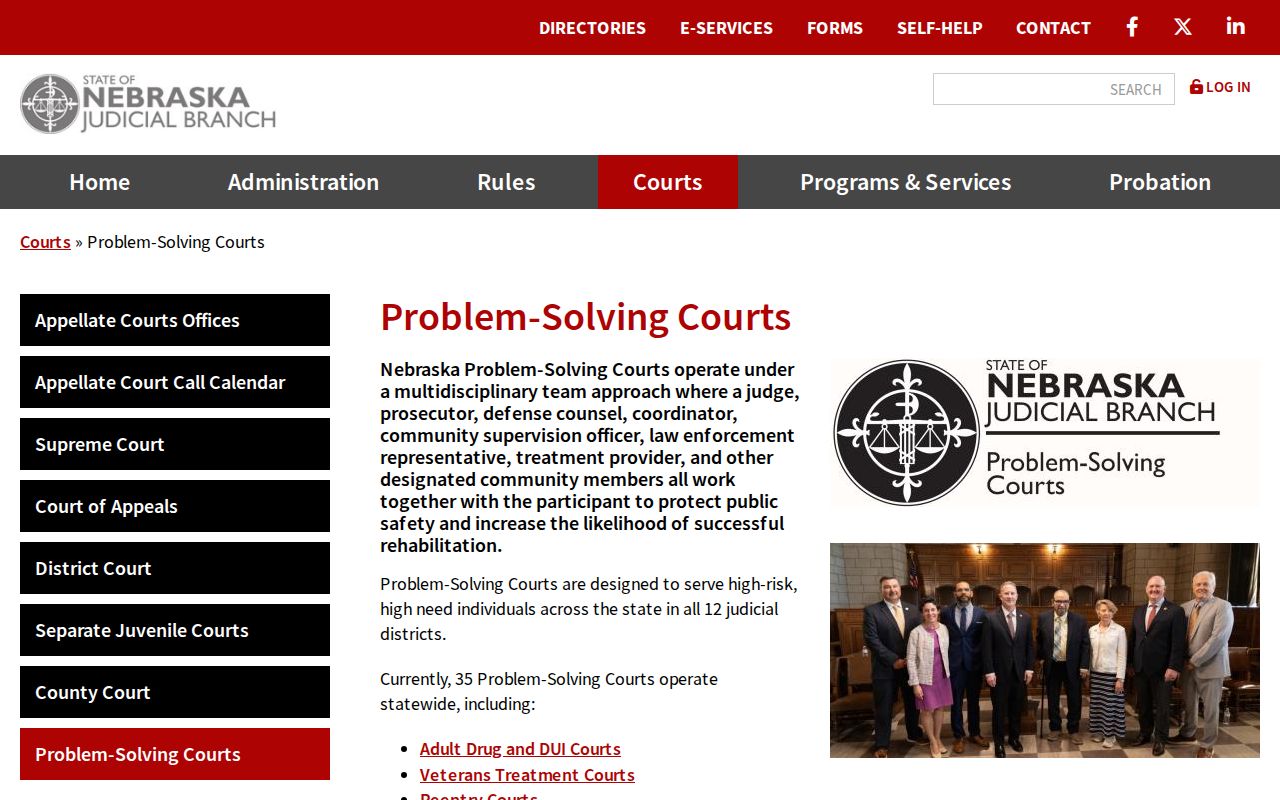
Douglas County runs several problem-solving courts. The Fourth Judicial District lists Adult Drug Court, Veterans Treatment Court, and Young Adult Court contacts for the county. None of them is a public participant database, though. Treatment material and participant details may face different access limits or look nothing like the public case record. For a docket search, the underlying County or District case stays the practical anchor in JUSTICE. That is where the real case record lives.
Nebraska’s problem-solving courts page describes the statewide program categories.
One caution on those filing totals. They are District Court counts alone, not convictions and not an all-court Douglas County figure, and they leave out most County Court and juvenile work.
Sealed Dockets and Public Access
Nebraska's electronic-access rule opens a fair amount to the public. Indexes, summaries, party names, Registers of Actions, available images, and calendars stay viewable. That holds unless a restriction applies. It does not make every document public. A case caption can stay visible. The image behind it may be redacted, sealed, unavailable, or still in an archive. Juvenile files and identifying information carry especially strong statutory protection.
Key rules:
Nebraska Supreme Court Rule § 1-805 permits defined electronic court information while recognizing access restrictions.
Neb. Rev. Stat. § 43-2,108 protects juvenile case files and identifying information except as law permits.
Nebraska Supreme Court Rule § 2-210 addresses protected information, redacted documents, and sealed filings.
Nebraska’s juvenile confidentiality statute is the authority shown in this official legislative capture.
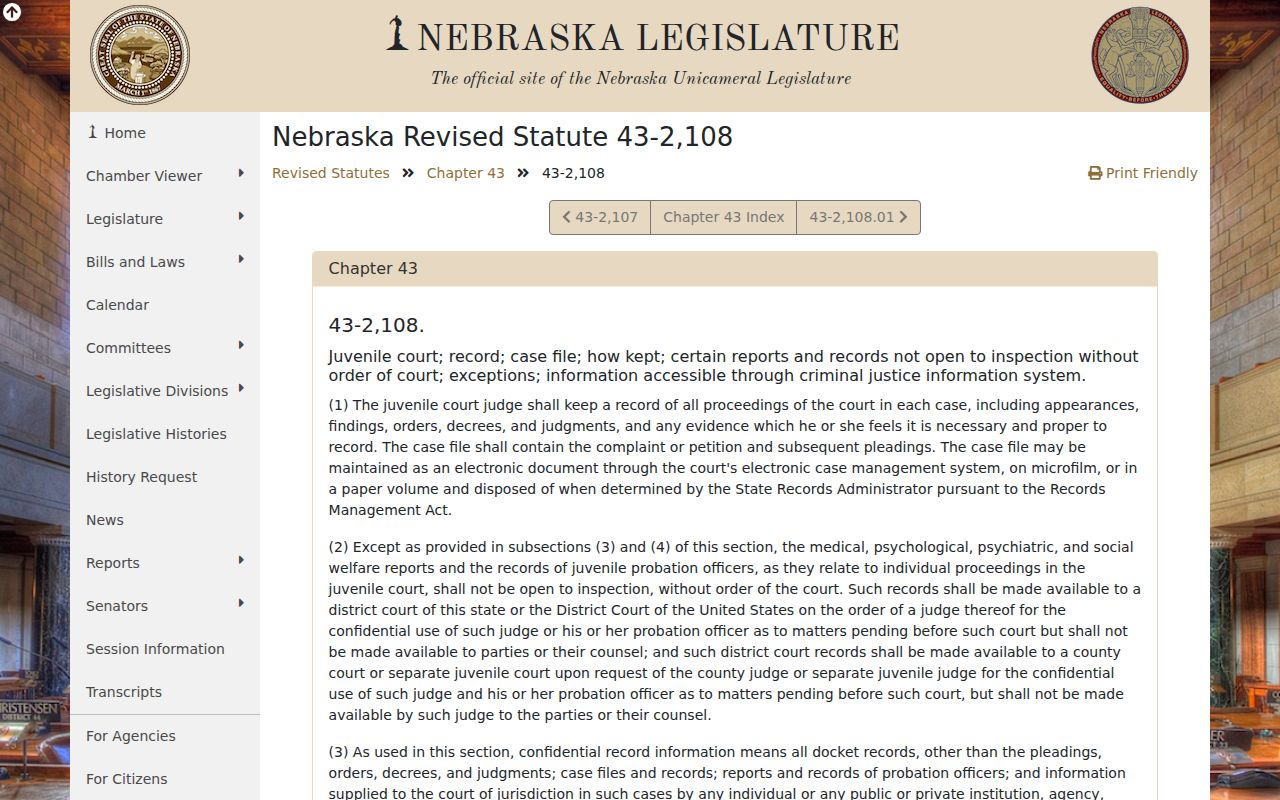
Choose your words with care here. Say a juvenile, sealed, or absent record is "not publicly viewable through this access path" rather than assuming it does not exist.
Douglas County Criminal Copy Requests
Once the docket points to the document you need, a clerk-held copy is the next stop. The right clerk depends on the court. County Court handles misdemeanors, traffic, ordinances, and preliminary hearings. District Court takes post-bind-over felony matters. The Juvenile Court clerk covers whatever that law lets a requester obtain. Give the county, case number, caption, and document name or date. Do not ask for a broad criminal history.
Nebraska's CC 3:29 copy-request instructions lay out three options. You can get electronic non-certified copies, mailed copies, and certified copies. Costs must be prepaid. The form promises no turnaround time. A sealed file is different again. The narrow DC 1:12 process exists for the person whose own record was sealed. It is not for general digging.
Keep the request focused. A complaint, a sentencing order, and a certified judgment are different records even under one criminal case number. Name the Douglas County court, the caption, and the document date, and state your delivery and certification choices. That helps the clerk find the right item fast. An entry may be newly filed or missing as an image. Ask whether it awaits imaging, is restricted, or sits in paper or microfilm.
Note: A public Register of Actions helps you locate a filing. It is not itself a clerk-certified judgment or order.