
Searching Douglas County Civil Dockets
Nebraska Judicial Branch case-information services put JUSTICE trial-court records within reach. One option is a one-time party-name search. It costs $17. The search runs for three calendar days, and it caps results at 30 records. Subscribers get far more search power. They can search by party name, court type, case type or subtype, county, year, judge, attorney, judgment date, and court case number. Cases that come back may include Case Detail, the party list, and the Register of Actions. Some also show financial information, judge notes where applicable, and many public document images.
Start with a party name in the docket search. Then confirm Douglas County, the court, the filing date, and the caption. Do that before you rely on any result. Two limits are worth knowing: a party-name lookup does not search for witnesses, and new case entries can lag by 24 hours. Anyone avoiding a subscription can use the public JUSTICE terminals at county courthouses during business hours. When a case seems missing, the clerk can check the official file, image status, or retention medium.
- Open JUSTICE and select a party-name or known-case-number search route.
- Use the Douglas County, court, year, or civil type filters only as needed to narrow a result.
- Verify the case caption, party role, filing date, and court before opening the Register.
- Read the chronological Register of Actions and any public image tied to the entry.
- Contact the court-specific clerk if a document, setting, or certification needs confirmation.
Note: When a paid name search hits its result limit, or a file is not online, the public terminal and the right clerk still work as practical alternatives.
Douglas County Civil Limits
Jurisdiction comes first in any Douglas County civil docket search. District Court handles general civil, domestic relations, protection-order, and administrative-appeal matters. County Court shares civil jurisdiction up to $70,000. Its Small Claims division takes claims up to $7,500 in an informal process with no jury, and attorneys do not appear for the parties there. Probate work, including guardianship, conservatorship, and adoption, sits in the County Court probate division.
| Douglas County court | Civil docket material | Clerk contact route |
|---|---|---|
| District Court | General civil, domestic relations, protection orders, and appeals | District Court clerk |
| County Court Civil/Small Claims | Civil cases through $70,000 and small claims through $7,500 | Civil/Small Claims clerk |
| County Court Probate | Probate, guardianship, conservatorship, and adoption | Probate clerk |
The Douglas County Court page lists the divisions, the civil limits, and current local contacts. Check the court division on any result. It helps you send a request to the right office. Pam Cardenas clerks the County Court. Crystal Rhoades clerks the District Court. Juvenile Court records are separate and confidential, a different route entirely. Omaha, Ralston, Valley, Bennington, and Waterloo send their city ordinance and traffic cases to County Court. Those are not civil docket categories.
Inside a Douglas County Civil Docket
The Nebraska Register of Actions is a timeline, not the whole case file. Complaints, answers, service filings, motions, and settings may appear with their entry dates. So may orders, judgments, dismissals, appeals, and post-judgment events. The substance lives elsewhere. Allegations, evidence, and the wording of a ruling are in the documents themselves. Read the dates and the sequence of events. Only then draw any conclusion from a short status label.
| Case number | Identifies the court, county, type, year, and sequence. CI is the civil case-type code. |
|---|---|
| Caption and parties | The formal case name and each party’s role, used to confirm a result. |
| Attorney field | Lists counsel shown in the statewide case record. |
| Register of Actions | Chronological filings, service, motions, settings, orders, and judgment events. |
| Judgment or dismissal | The result entry; obtain the actual order for its terms and scope. |
Sometimes a docket entry links to a document image. Sometimes it does not. Paper files, microfilm, an unscanned document, protected information, or a sealed filing can all explain the gap.
Douglas County Civil Search Fields
The statewide record offers more than a name box. Court type and case type split District Court from County Court matters. County, year, judge, and attorney fields narrow a broad search. Separate routes search by judgment date or court case number. Filters help when a party has a common name. A narrow one can hide a case. It may sit under a different year or code. Nebraska Supreme Court Rule § 1-805 sets out the public electronic access framework. It covers indexes, summaries, Registers of Actions, calendars, and available images.
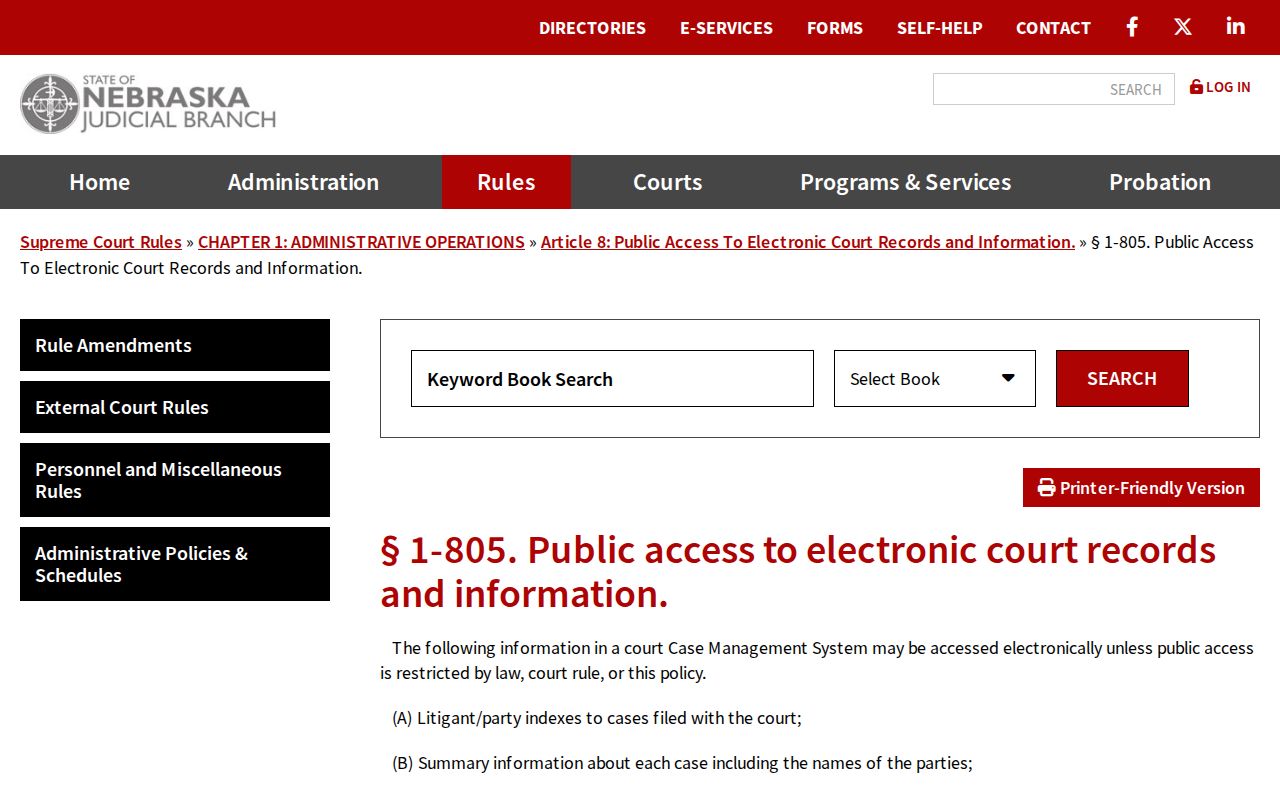
That rule supports searching public court information. To verify a case's current record or get an official copy, the court and clerk remain the source.
Civil Case Types on the Docket
A Douglas County civil docket spans many case categories. Court and case type shape what a Register may contain. They also point to which clerk keeps the official file. A small-claims matter moves through a different procedural setting. It differs from a major District Court civil case. Probate has its own County Court division. The statewide search shows the broad type and subtype, which helps separate searchers with similar party names. Use that detail before assuming two entries belong to the same person.
- General civil claims and related motions in District Court
- County Court civil matters within the stated jurisdictional limit
- Small claims matters in the informal County Court process
- Probate, guardianship, conservatorship, and adoption proceedings
- Domestic relations, protection-order, and administrative-appeal records in their proper court routes
A complaint starts some civil cases. Seeing one in the Register still tells you little. It does not reveal every allegation or exhibit; the document itself supplies that detail when it is publicly accessible.
Douglas County Civil Filing Mix
Douglas County District Court reported 3,795 civil filings in FY2023. Read that number carefully. It is a District Court total. It does not cover every civil, small-claims, probate, or juvenile matter in the county. This is why a Douglas civil docket search must begin with court selection. A County Court record may not sit where a District Court searcher expects it. An appeal can move it to another court level.
Thinking about review of a trial-court matter? Nebraska Judicial Branch appeal resources are the official starting point for a party weighing that step.
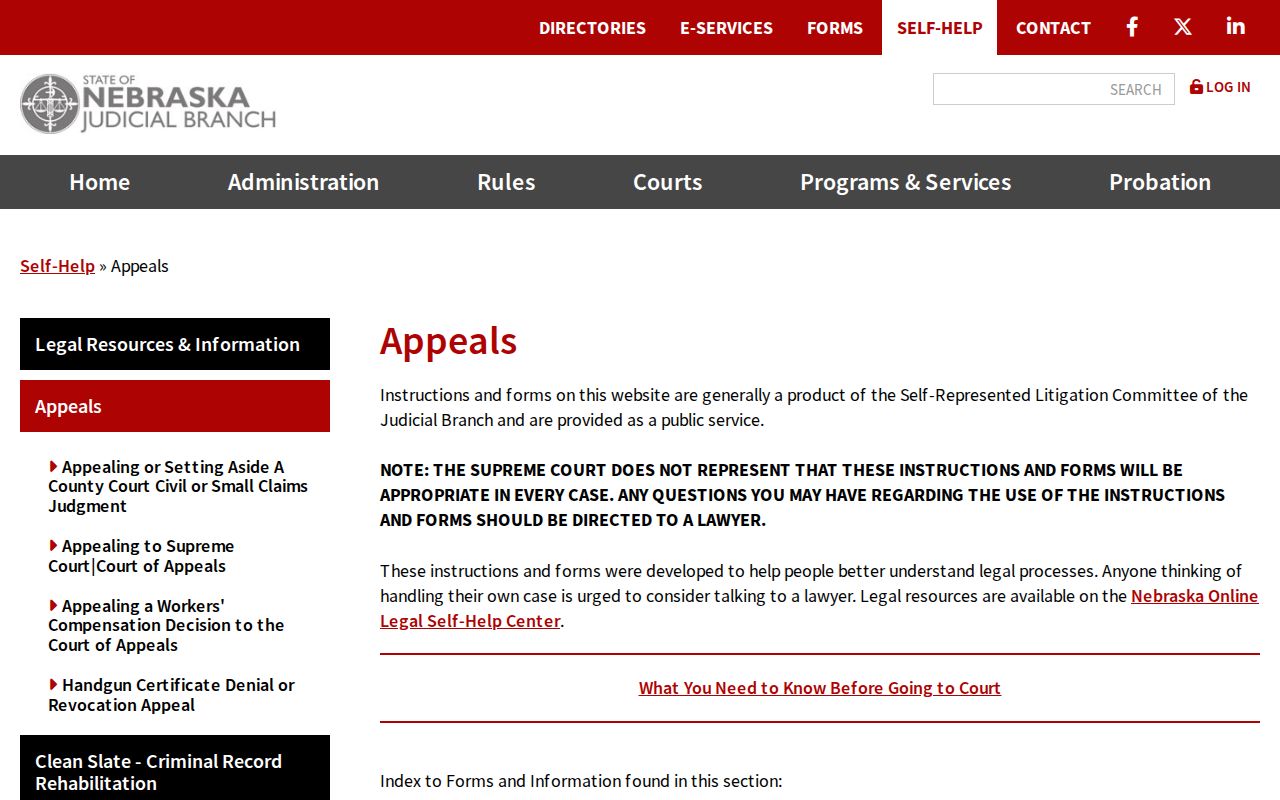
The filing count says nothing about outcomes, individual people, or all countywide civil activity. Treat it as context for the District Court docket alone.
Civil Docket Settings and Hearings
Settings show up as events in the Register of Actions. They often follow a pleading, a service return, a motion, or a scheduling order. Motion hearings, status events, trial settings, mediation or settlement activity, and post-judgment proceedings all appear this way. A setting is never the same as a final judgment, though. To learn whether a hearing was held, continued, reset, or resolved by order, read the entry before it. Then read the latest entry after it.
The statewide calendar covers eligible County Court settings. But it leaves Douglas District Court out of its district-court coverage on purpose. For District Court dates, turn to JUSTICE. You can also check the judge’s courtroom schedule, or contact the clerk and the court directly. The court-date channels and calendar cautions are laid out in Douglas County Court Dates.
Note: A blank calendar result is not proof. It does not show that a civil setting was canceled, completed, or never scheduled.
Douglas County Civil Register and Complaint
A Register of Actions tells you what happened and when. The complaint, answer, motion, or judgment tells you more. It shows what was claimed, asked for, or ordered. Keep that split in mind during a civil docket search. A short Register line may report that a motion was filed or granted. It may not spell out its terms. So find the event first. Then hunt down its public image, or ask the court for a copy. Privacy rules shape what you will see, too. Nebraska Supreme Court Rule § 2-210 covers protected information, redacted documents, and sealed filings.
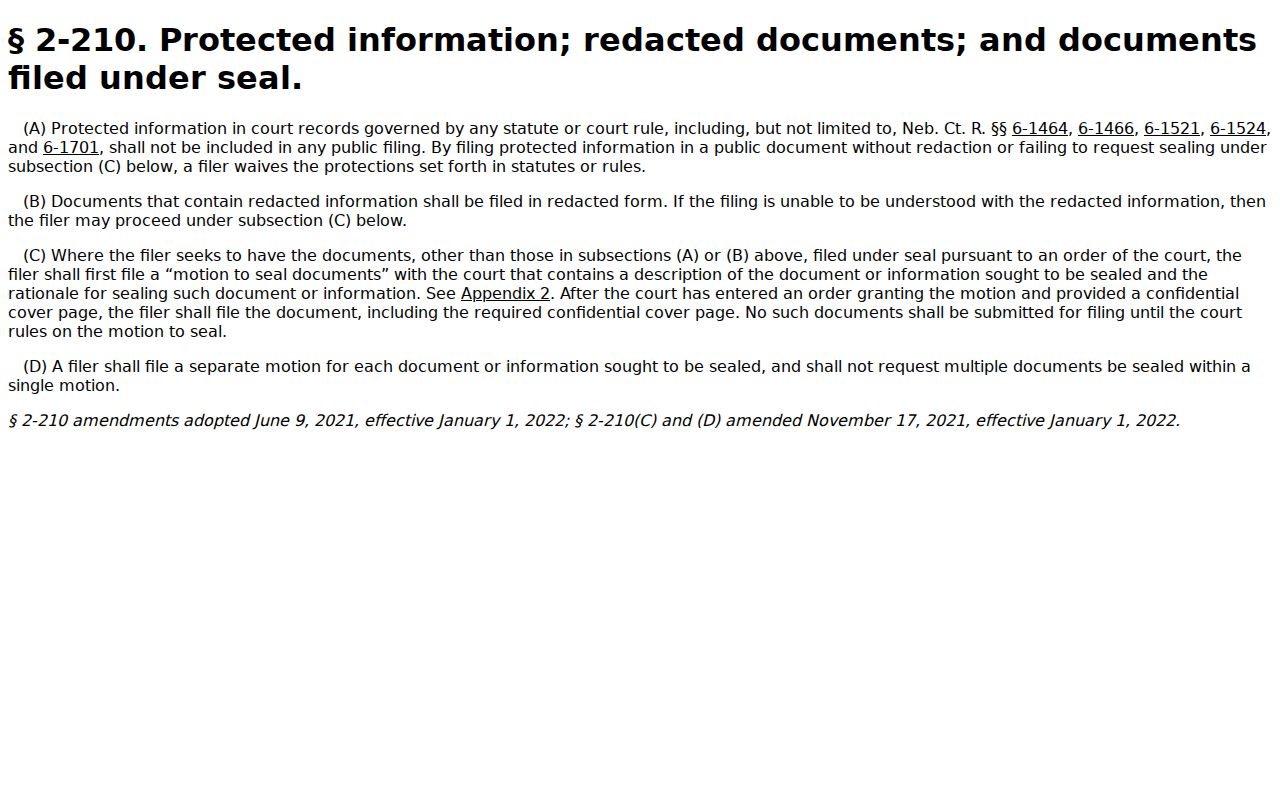
A case entry can be public while its attachments stay restricted. Public access does not erase the rules that guard redacted or sealed material.
Civil Docket Access Rules
Nebraska opens its records through two doors at once. One is the general Public Records Act; the other is a set of court-specific electronic-access rules. Together they let the approved system show case summaries, party names, Registers of Actions, calendars, and available images. That access has limits. A written public-records request usually draws an access, denial, or estimate response within four business days. Still, start smaller. For a named court file, ask the clerk who holds it before drafting anything formal.
Key rules:
Neb. Rev. Stat. § 84-712 provides a right to inspect and copy public records, subject to exceptions.
Nebraska Supreme Court Rule § 6-1464 protects specified personal and financial identifiers in civil court records.
Nebraska Supreme Court Rule § 2-210 governs redaction and sealed filing treatment.
The civil protected-information rule is reflected in this official Nebraska Judicial Branch capture.
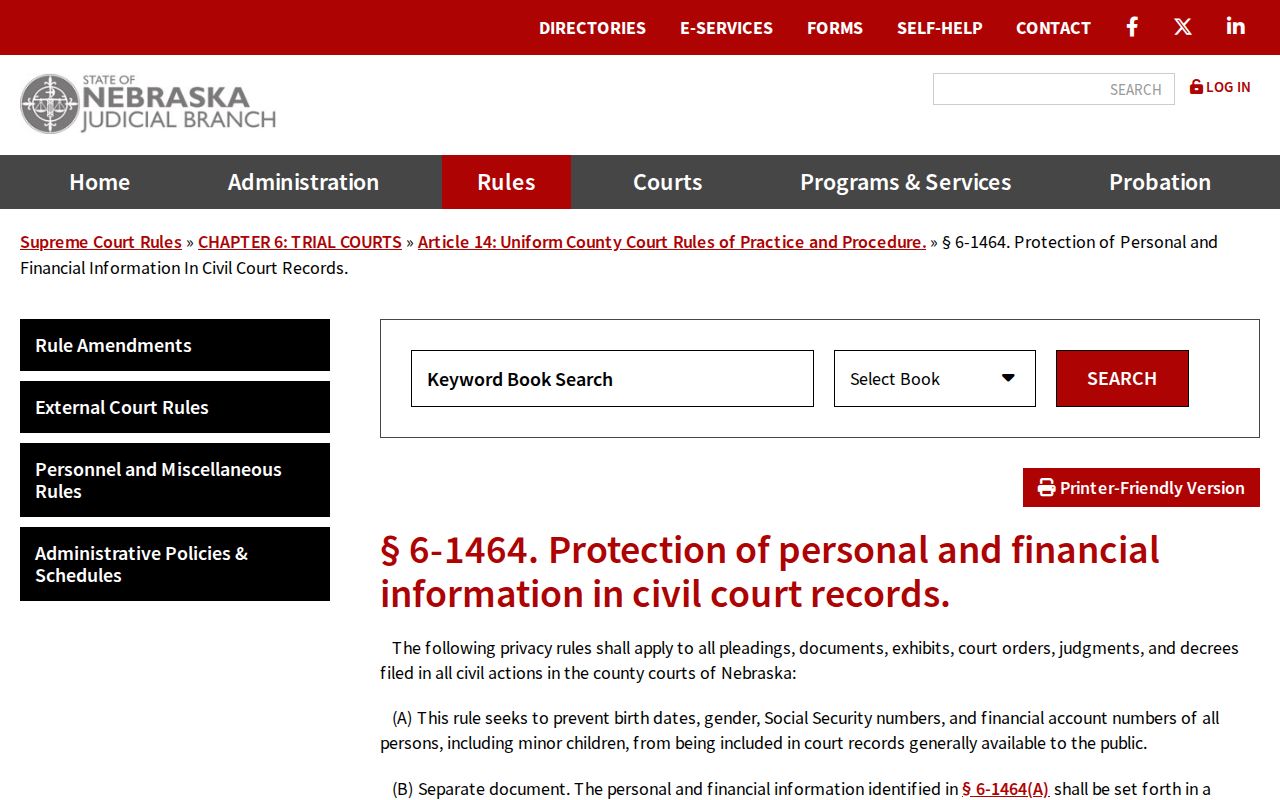
An unavailable image is not proof the record is missing. It may be restricted, redacted, unscanned, or simply kept in another medium.
Douglas County Civil Appeals
A civil docket does not always stop at judgment. County Court civil and small-claims appeals carry a general 30-day notice deadline, along with requests for a transcript and bill of exceptions and the required deposits. A $50 small-claims bond applies as well. These are procedural steps with deadlines, not a substitute for advice about your own case. After a County Court judgment, the later docket may sit at the District Court level.
Nebraska’s county-court civil and small-claims appeal instructions set out the official requirements and forms.
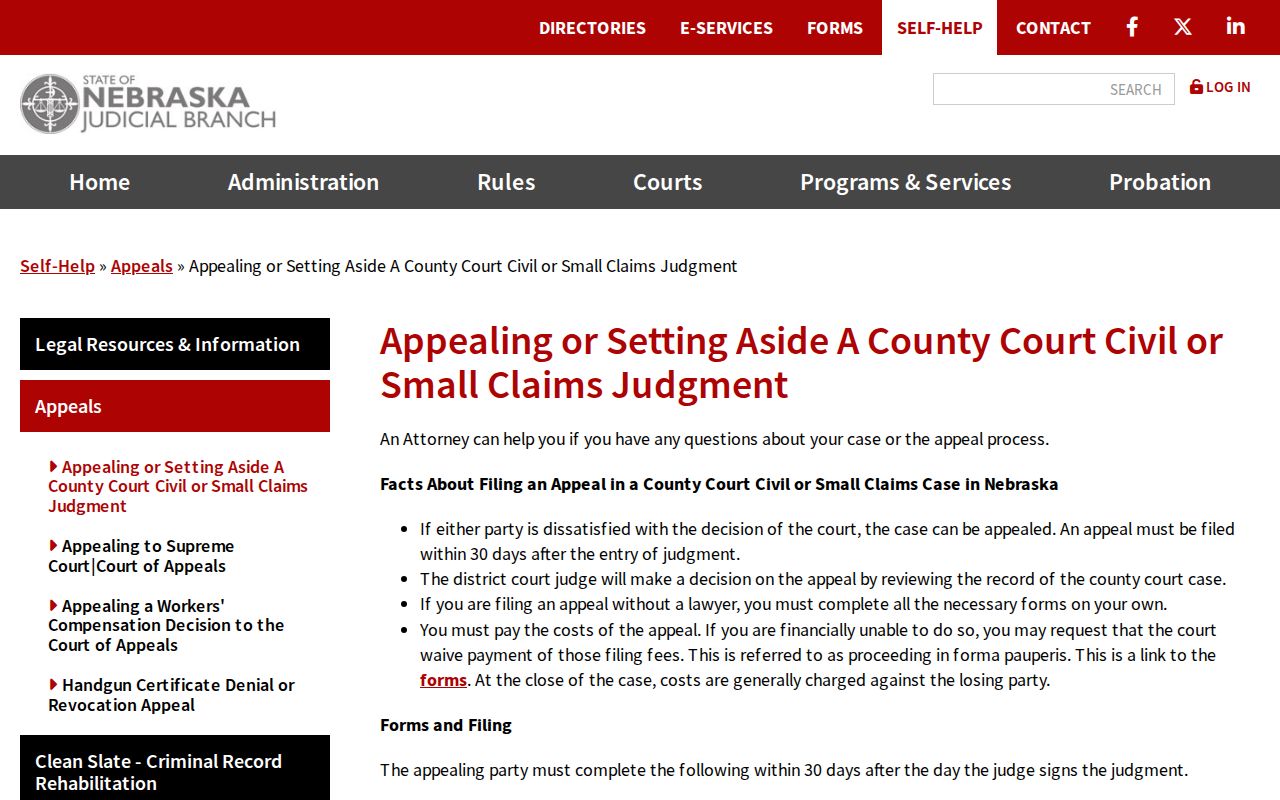
When a docket shows an appeal, confirm three things. Ask the right clerk for the notice date, the court, and the latest order. The Register is only the trail of events. The filed notice and the orders carry the controlling text.
Do not assume an appeal entry is complete, either. Check whether the notice went into the original court. Also check whether a later District Court case number or appellate record was opened. The caption may look familiar while the court level shifts beneath it. A clerk can point you to the public file holding the notice, transcript request, judgment, and later orders. That step keeps a judgment entry from being confused with the separate record of post-judgment review. Civil appeal timing is strict. Check the filed notice and the court record promptly instead of inferring anything from an older judgment entry.