
Douglas County Court Calendars Explained
Nebraska runs a statewide Multi-Court Case Calendar covering selected County Court and District Court settings, and Douglas County matters fall into its County Court route for traffic and other limited-jurisdiction cases. You can search it by date or by last name. It displays some upcoming court events. Still, a calendar is not the full case record. It can lag behind a recent change, so the newest Register of Actions entry remains the key document to check. Nebraska’s Multi-Court Case Calendar is the official public calendar search interface, and its coverage notices explain what it does and does not include.
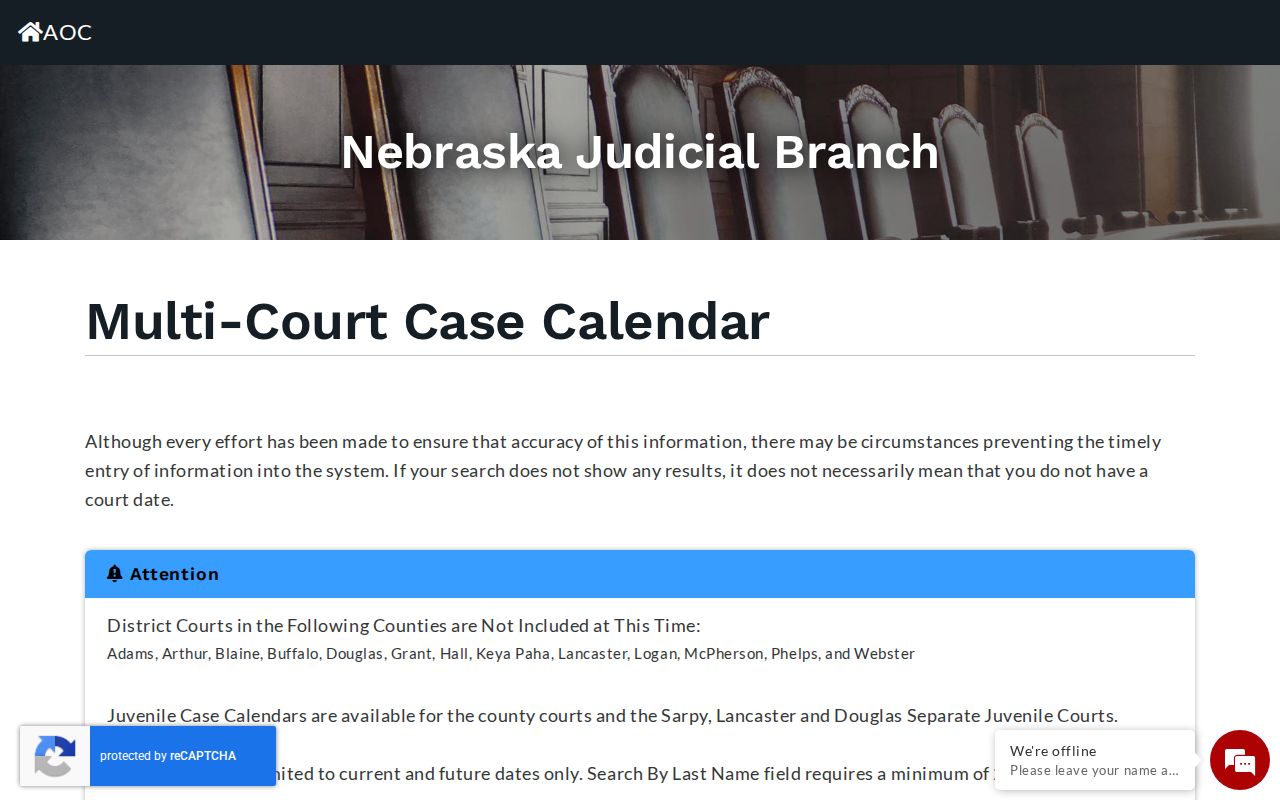
The interface itself warns that results can be incomplete, inaccurate, or untimely. A blank result page, in other words, is not proof that no Douglas County court date exists.
Douglas County District Calendar Gap
Here is the catch for Douglas County. The statewide calendar expressly excludes Douglas District Court from its district-court coverage. That local limit touches felony, general civil, domestic-relations, protection-order, and other District Court matters. Picking District Court in the statewide tool will not reliably clear or confirm a Douglas District date. The exclusion does not mean District Court holds no settings. It means you confirm the date through a different court record. You can also contact the court. For a District Court case, search JUSTICE by party name or case number. Read the newest Register entry. Check the judge’s courtroom schedule when available. Then call the District Court clerk or the judge’s office if the setting is still unclear. A felony preliminary hearing may show up in County Court first. A later District Court date may follow after bind-over. Note: an empty District Court calendar result is a coverage limitation. It is not a disposition. It is not a sign the case has ended.
Finding Your Court Date
Match the channel to the court. County Court settings can be checked through the public calendar and the JUSTICE case record. District Court takes JUSTICE plus the judge’s schedule or direct confirmation. The Douglas exclusion is the reason. County Court Clerk Pam Cardenas and District Court Clerk Crystal Rhoades keep different court records. Route your request accordingly. An online result can be incomplete. A clerk, court coordinator, or judge’s office can confirm the current setting. A public courthouse terminal offers another way to review JUSTICE during business hours. For a traffic ticket, the citation’s printed appearance date and waiver instruction are the primary documents.
- Find the court and case number on the citation, notice, or existing case record.
- For an eligible County Court or juvenile-compatible search, open the statewide calendar, select Douglas, and search by date or last name.
- Open JUSTICE to compare the result with the newest Register of Actions and any newer setting entry.
- Use a public courthouse terminal if online access is unavailable, or call the County Court, District Court, or Juvenile clerk that holds the case.
- For District Court, also check the judge’s courtroom schedule or direct court contact; for a posted docket, treat it as a useful check rather than final proof.
- Confirm the date, time, courtroom, and setting type with the clerk, coordinator, or attorney before appearing.
Statewide calendar staff list Douglas County Court specialists at (888) 342-6395. Call there with scheduling questions. A juvenile matter stays under its separate court and confidentiality rules, even when a calendar route exists.
Douglas County Calendar Search Fields
The calendar interface asks for a court selection before any search term. Choose Douglas County on the County Court route, then search by date or surname. Date searches cover current and future dates only. A last-name search needs at least two characters. The District Court dropdown flags Douglas as excluded. That is your cue to use JUSTICE and direct District Court confirmation instead.
| Calendar field | Type | Douglas County use |
|---|---|---|
| Select Court Type | Control | Choose County Court or District Court; Douglas District is excluded. |
| County Courts | Dropdown | Select Douglas County for eligible County Court settings. |
| Search Type | Control | Search by date or last name. |
| Search Value | Text or date | Current/future date or surname of at least two characters. |
| Search | Button | Returns the available public calendar result. |
Nebraska’s court-records search policy describes the public-search channels and courthouse terminal access.
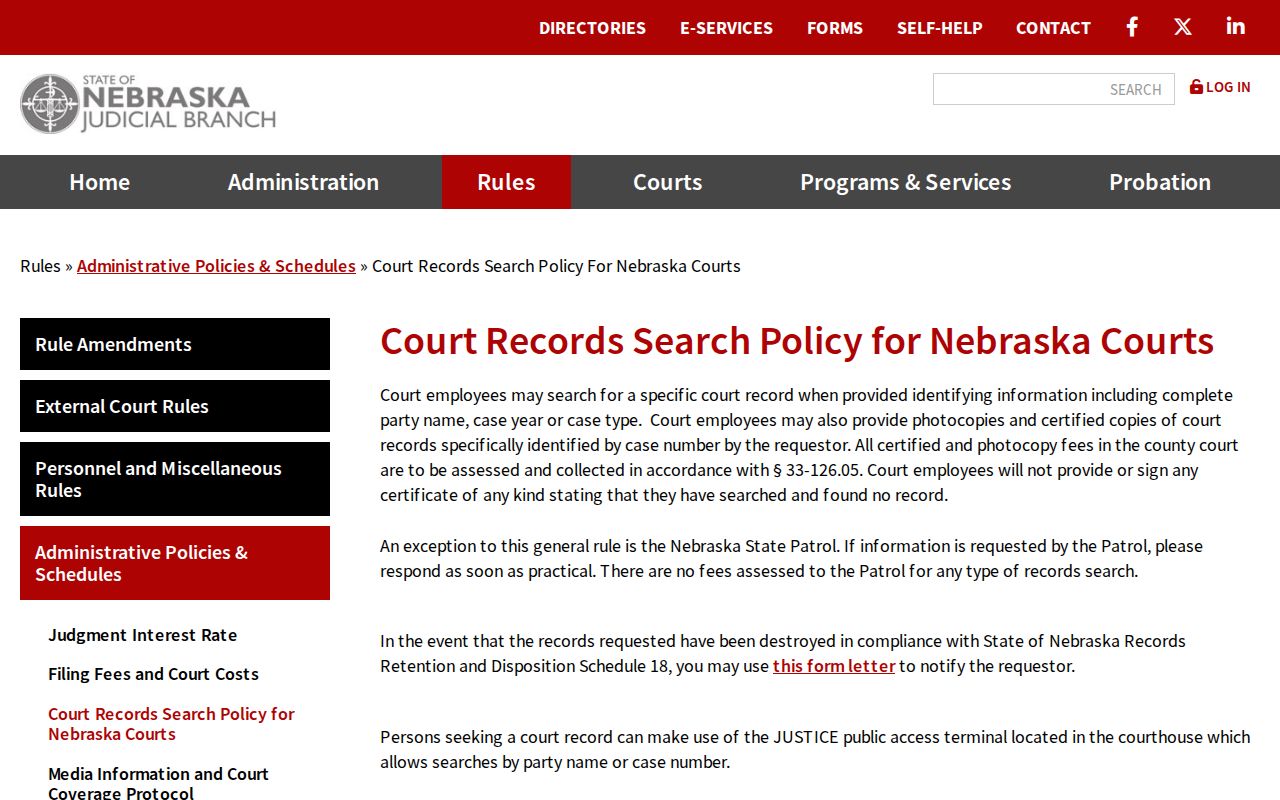
No login or payment is needed for the calendar. Treat its result as one confirmation source among others, not a substitute for the current court record.
How to Read a Court Setting
A setting line describes a planned court event. Read it alongside the case number and the most recent Register entry. Court, date, time, location, and setting type work together. A preliminary hearing, for example, sits at a different procedural stage than a plea or a civil motion hearing. Watch for later entries too. A continuance, reset, order, or amended notice can supersede an earlier setting.
| Date | The scheduled calendar day, which should be checked against the most recent case entry. |
|---|---|
| Time | The stated start time; it can differ from the time a court begins calling a group docket. |
| Courtroom or location | The court or room assignment shown for the event; confirm it before appearing. |
| Judge or court | The presiding court, judge, or division connected to the setting. |
| Setting type | The event description, such as arraignment, preliminary hearing, motion hearing, plea, trial, sentencing, or review. |
A calendar event is not a disposition. The Register and the resulting order tell you whether the setting was held and what the court actually did.
Douglas County Court Setting Terms
No official source publishes a complete Douglas County setting-code legend. Common setting names can still be read in plain terms. Do not treat them as a complete list. Do not assume a local abbreviation carries one fixed meaning. When a code is unfamiliar, ask the clerk. Or review the linked public order instead of guessing from a short label.
- Arraignment
- A criminal hearing that addresses the charge and response.
- Preliminary hearing
- A County Court stage that can precede felony bind-over to District Court.
- Pretrial
- A court event before trial, often addressing preparation or unresolved matters.
- Continuance
- A scheduled event moved to a later date.
- Review or status
- A hearing that checks progress or addresses the present status of a case.
Court-specific procedures can change how a setting is handled and what attendance requires. Douglas County juvenile local rules are one example worth reading.
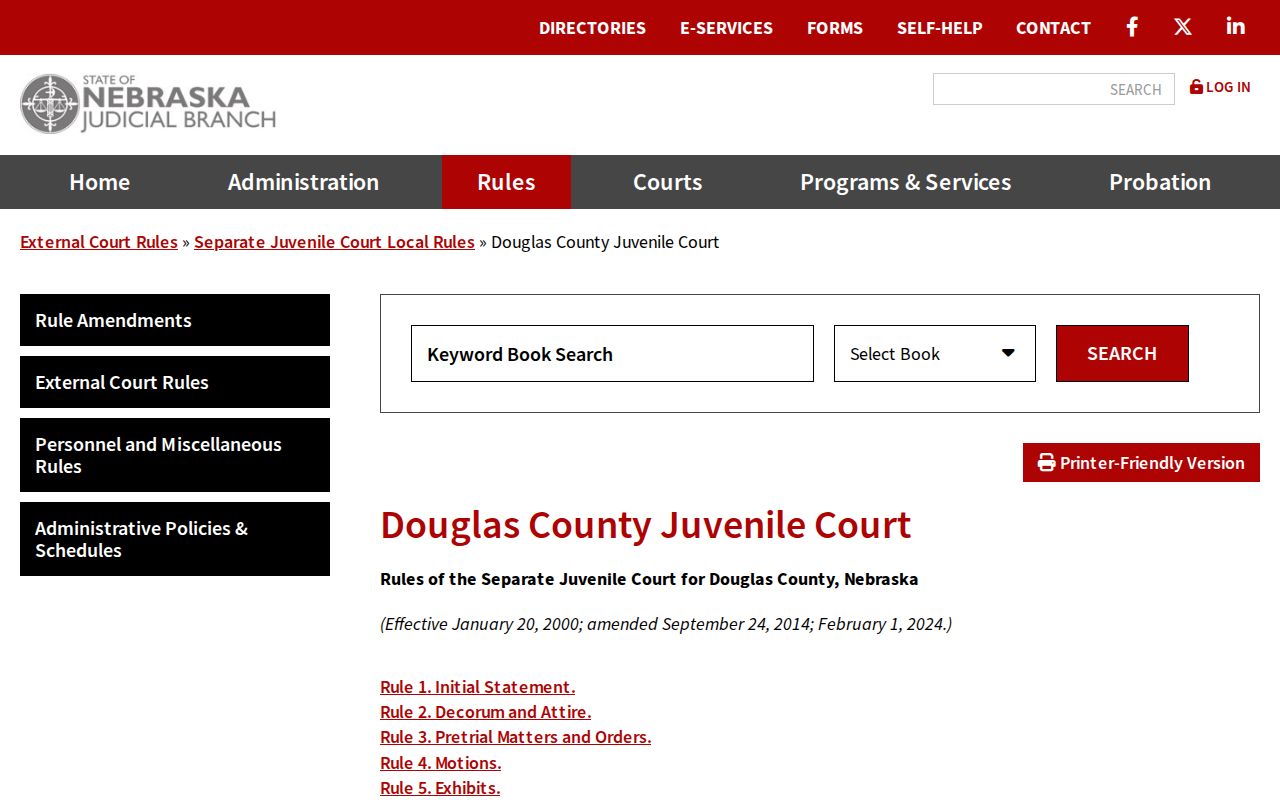
Confirm juvenile scheduling with the Separate Juvenile Court, since its records and proceedings carry confidentiality limits.
Continuances, Resets, and Cancellations
A continuance or reset simply moves a court setting to another day. The docket may tell you why through an entry, motion, notice, or order. A calendar view often will not. It may show only the new date, or drop the old one entirely. So compare the date of the newest Register entry against the setting you first saw. Is an attorney on the case? Counsel can confirm what notice came in and can say whether a filing asked for the change.
Never read a deleted or empty calendar line as a closed case. The setting may have been continued. It may have been given a new slot or shifted to a different courtroom. It could also have been left off a public view for another reason. Court staff give the final word. Calling them matters most when the scheduled date is close. Note: A reset changes the scheduled event. A disposition describes what the court has decided or the case's current outcome.
Douglas County Calendar Results
Treat calendar results as a locating tool and nothing more. The statewide interface itself warns that its information can be incomplete, inaccurate, or untimely. Its calendar fields cannot replace the case's Register of Actions, a clerk's confirmation, or a judge's current courtroom schedule. That caution carries extra weight in Douglas County, because County Court and District Court are not covered the same way by the public calendar. The Judicial Branch's current-domain announcement documents the official nebraskajudicial.gov address used for court information.
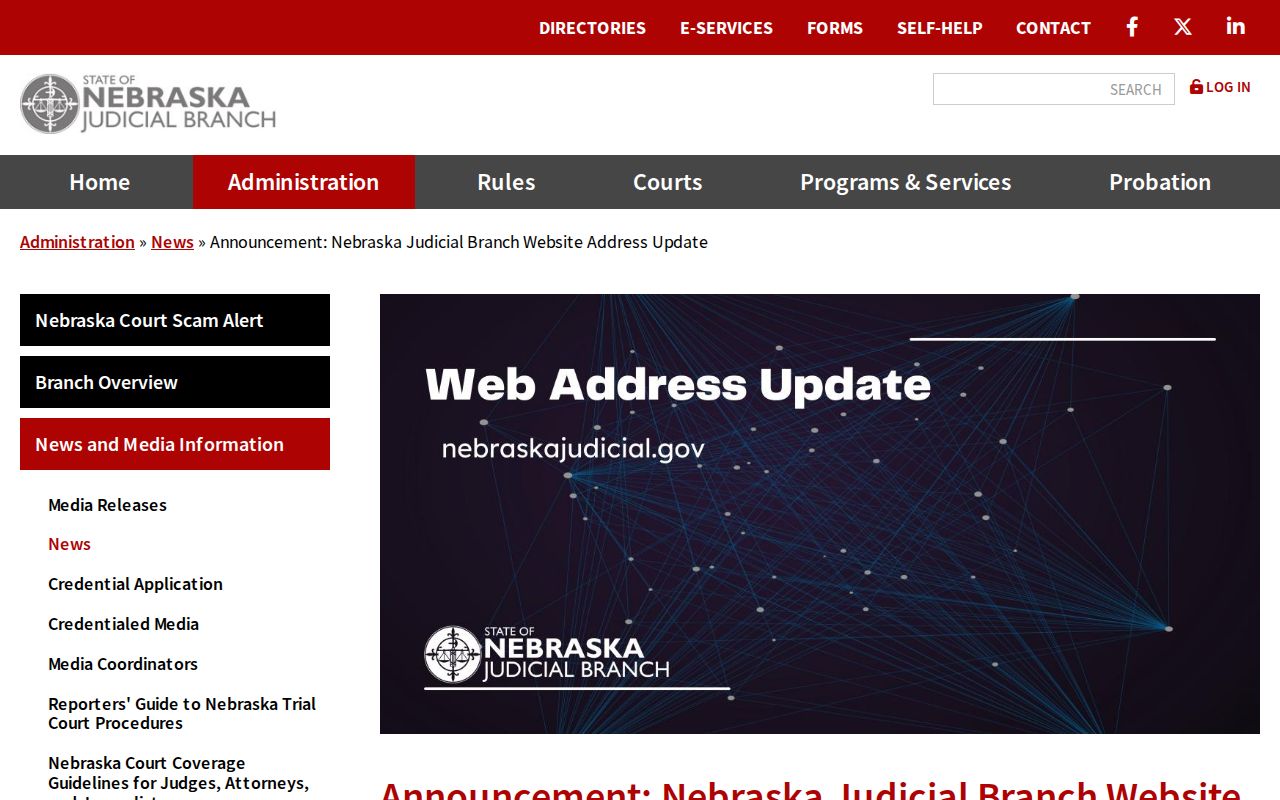
Check dates through official court and Nebraska.gov addresses. Then compare what you see with the court that actually holds the case.
If You Miss a Court Setting
Missed a Douglas County court setting? Act fast. Start by identifying the court and the case number. Then reach the attorney if one represents a party. Also reach the clerk or coordinator who holds the case. The Register of Actions can reveal a new setting, order, warrant, or other entry. Do not lean on a calendar page alone after a missed appearance. A newer entry may not appear there right away.
Missed a setting? A missed criminal court date can lead to a failure-to-appear issue, a warrant, or a bond consequence depending on the case and court order.
Contact the appropriate Douglas County court clerk or coordinator promptly to verify the record and the current setting.
Consult a licensed attorney about a missed setting before taking action in a pending matter.
For a traffic matter, read the citation and any waiver instruction. Some citations allow payment without an appearance, while an appearance-required offense must go through the court.
Douglas County Court-Date Delay
JUSTICE can take up to 24 hours to display a new entry. That lag matters. It is a reason to double-check any date that was recently set, moved, or entered in court. Check the Register first. Then call the correct clerk or court office when the displayed date affects an appearance. A court notice, citation, or direct confirmation often carries more current information than a general public result. Douglas County Connection's February 2026 issue is an official county newsletter. It is not a court calendar or a substitute for court-specific confirmation.

County news and courthouse-area information add local context. But the originating court controls the current setting, the location, and any change to a court date.
When you call, have the case number, the court, and the notice date in front of you. The right clerk can sort a County Court calendar issue from a District Court scheduling question. The clerk can also point a juvenile inquiry to the separate clerk. That direct route helps most after a late change, a missing calendar result, or a hearing that moved from one court stage to another.